History of Harvest
Neil Young
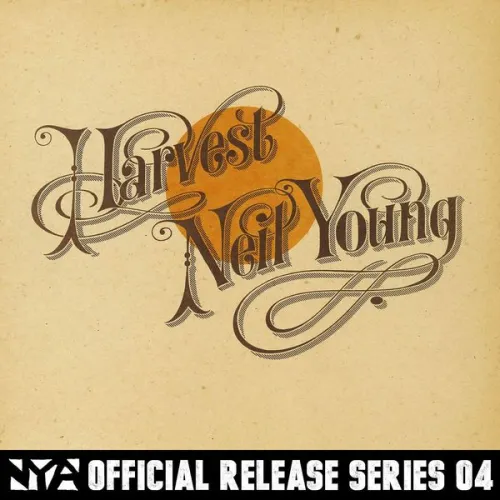
Harvest is the fourth studio album by Canadian musician Neil Young, released in February 1972 by Reprise Records. It is his most commercially successful work and, to date, the only album of his career to reach number 1 on the U.S. Billboard 200 chart. The album also reached number 1 in several countries, including the United Kingdom, Canada, Australia, Norway, and the Netherlands, and became the best-selling album of 1972 in the United States.
After leaving Crosby, Stills, Nash & Young, Young assembled a group of studio musicians he called The Stray Gators, and with them recorded Harvest in a country rock style that combines acoustic guitars, vocal harmonies, and elements of folk and country. The album was recorded in various studios and venues: Quadrafonic Sound Studio in Nashville, his Broken Arrow ranch in California, and Barking Town Hall in London, giving it an organic and highly varied texture. The production was helmed by Neil Young alongside Elliot Mazer, Henry Lewy, and Jack Nitzsche, who helped shape a warm, enveloping sound.
One of the most striking features of Harvest was the presence of major guest artists on several tracks. The London Symphony Orchestra appears on “A Man Needs a Maid” and “There’s a World,” adding an orchestral touch uncommon in rock music of the era; while voices such as those of David Crosby, Graham Nash, Linda Ronstadt, and Stephen Stills reinforced the harmonies, particularly on songs like “Heart of Gold.” In addition, former Band member Levon Helm played drums on “Alabama,” and Billy Talbot and Ralph Molina appeared on several tracks, carrying on Young’s signature sound.
The album includes some of the great classics of Neil Young’s career, which have become part of the general imagination of 1970s rock. “Heart of Gold” was the most successful single, reaching number 1 on the Billboard Hot 100 chart and becoming the musician’s only song to top that chart. “Old Man” also made a significant impact, reaching the U.S. Top 40 and peaking at number 31 on the Billboard Hot 100, while tracks such as “Out on the Weekend,” “There’s a World,” “Alabama,” and “The Needle and the Damage Done” established themselves as defining pieces within his repertoire.
Thematically, Harvest reflects a moment of introspection and doubt in Young’s life, as he was at the peak of his fame but grappling with serious back problems and a growing awareness of the contradictions inherent in stardom. Many lyrics address the passage of time, love, loss, and the need to find a place of calm amid the noise of success. The combination of quiet songs like “Harvest” or “Words (Between the Lines of Age)” with other tracks of a more critical tone, such as “Alabama,” creates a complex emotional landscape that oscillates between melancholy and lucidity.
The album was exceptionally well-received at the time and has maintained its status as a masterpiece ever since. It has been certified double, triple, and, in some contexts, even quadruple platinum in the United States, and its songs regularly appear on lists of the greatest albums of all time. The 50th-anniversary reissue, which includes remastering, bonus material, and the documentary Harvest Time, has reinforced its presence in Young’s contemporary catalog, introducing new generations of listeners to the recording process and the album’s “outtakes.”
Neil Young’s Story
Neil Percival Young is a Canadian singer-songwriter, guitarist, and producer considered one of the central figures of rock and roots music over the past fifty years. Born in Toronto, he began his career on the Winnipeg scene before moving to Los Angeles, where he joined the band Buffalo Springfield and began to develop his own sound. Throughout his career, he has alternated between band projects (notably Crazy Horse and collaborations with Crosby, Stills & Nash) and solo work, with a style that blends folk, country, rock, and elements of grunge and more experimental sounds.
Neil Young’s solo debut came in 1968 with his self-titled album, followed by seminal works in the 1970s, such as Everybody Knows This Is Nowhere (1969) with Crazy Horse, After the Gold Rush (1970), and, of course, Harvest (1972), which catapulted him to the top of the charts. During this period, he developed an aesthetic characterized by long, distorted guitars on the Crazy Horse albums and, on the other hand, a more acoustic and melodic side on Harvest and other works, demonstrating a versatility that has been emulated by generations of musicians.
Alongside the successful Harvest era, Neil Young participated in collaborative projects such as Crosby, Stills, Nash & Young, contributing songs and energy to the folk-rock movement of the late 1960s and early 1970s. Over the years, he has continued to release studio albums, live recordings, compilations, and archival projects, demonstrating a capacity for constant reinvention within his core sound. He has tackled themes of social, environmental, political, and personal criticism, ranging from denunciations of war and environmental disasters to intimate tales of love and loss.
Neil Young has been honored with numerous awards and inducted into the Rock and Roll Hall of Fame, both as a solo artist and as a member of Buffalo Springfield. In addition to his recording career, he has been noted for his interest in high fidelity and the distribution of his music in high-resolution audio formats, promoting platforms and projects that champion audio quality. He remains a leading figure for folk-rock, country rock, and grunge bands, and his repertoire continues to be widely referenced and covered by other artists.
Songs from Harvest with durations
- Out on the Weekend – 4:35
- Harvest – 3:10
- A Man Needs a Maid – 4:00
- Heart of Gold – 3:06
- Are You Ready for the Country? – 3:23
- Old Man – 3:25
- There’s a World – 3:01
- Alabama – 4:02
- The Needle and the Damage Done – 2:05
- Words (Between the Lines of Age) – 2:10
Neil Young Discography (Major Studio Albums)
- Neil Young (1968)
- Everybody Knows This Is Nowhere (1969)
- After the Gold Rush (1970)
- Harvest (1972)
- Time Fades Away (1973)
- On the Beach (1974)
- Tonight’s the Night (1975)
- Zuma (1975)
- American Stars ’n Bars (1977)
- Comes a Time (1978)
- Decade (compilation, 1977, includes much of his early work)
- Rust Never Sleeps (1979)
- Hawks & Doves (1980)
- Re·ac·tor (1981)
- Trans (1982)
- Everybody’s Rockin’ (1983)
- Old Ways (1985)
- Landing on Water (1986)
- Life (1987)
- This Note’s for You (1988)
- Freedom (1989)
- Ragged Glory (1990)
- Harvest Moon (1992)
- Sleeps with Angels (1994)
- Mirror Ball (1995)
- Broken Arrow (1996)
- Silver & Gold (2000)
- Greendale (2003)
- Prairie Wind (2005)
- Living with War (2006)
- Chrome Dreams II (2007)
- Fork in the Road (2009)
- Le Noise (2010)
- Psychedelic Pill (2012)
- Storytone (2014)
- The Monsanto Years (2015)
- Peace Trail (2016)
- The Visitor (2017)
- The Times (2020)
- Homegrown (2020)
- Barn (2021)
- Toast (2022)
- Chrome Dreams (2023)
- Early Daze (2024)
Harvest on YouTube
On YouTube, there are several full versions of Harvest in full-album format, which bring together all ten songs in order, from “Out on the Weekend” to “Words (Between the Lines of Age)”.