The Sirens' Song

History of Perfect Strangers
Deep Purple
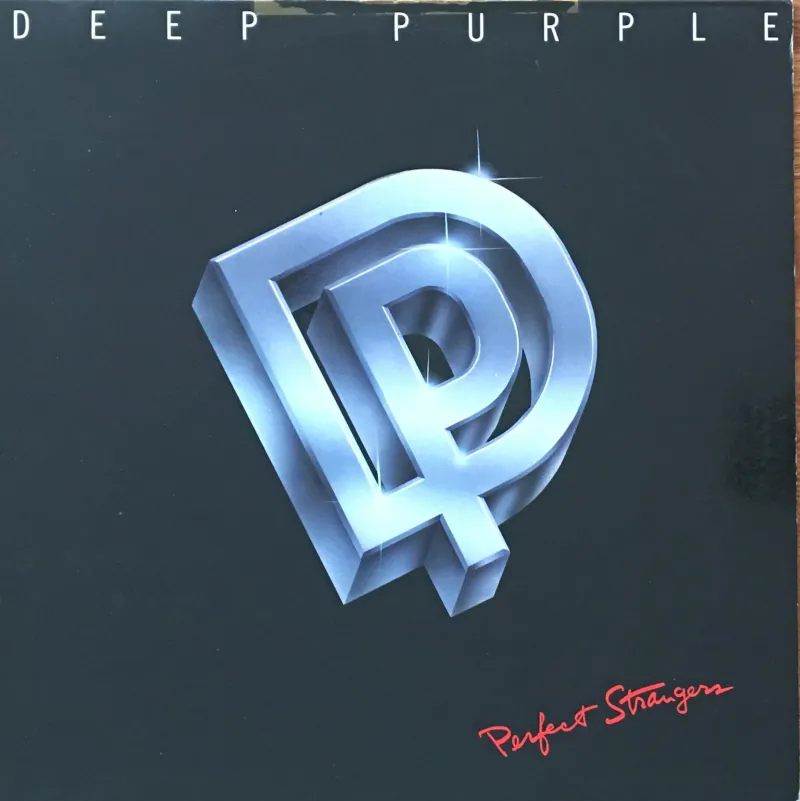
Against all odds, that cover art served as the band's logo for years and appears on all their compilations.
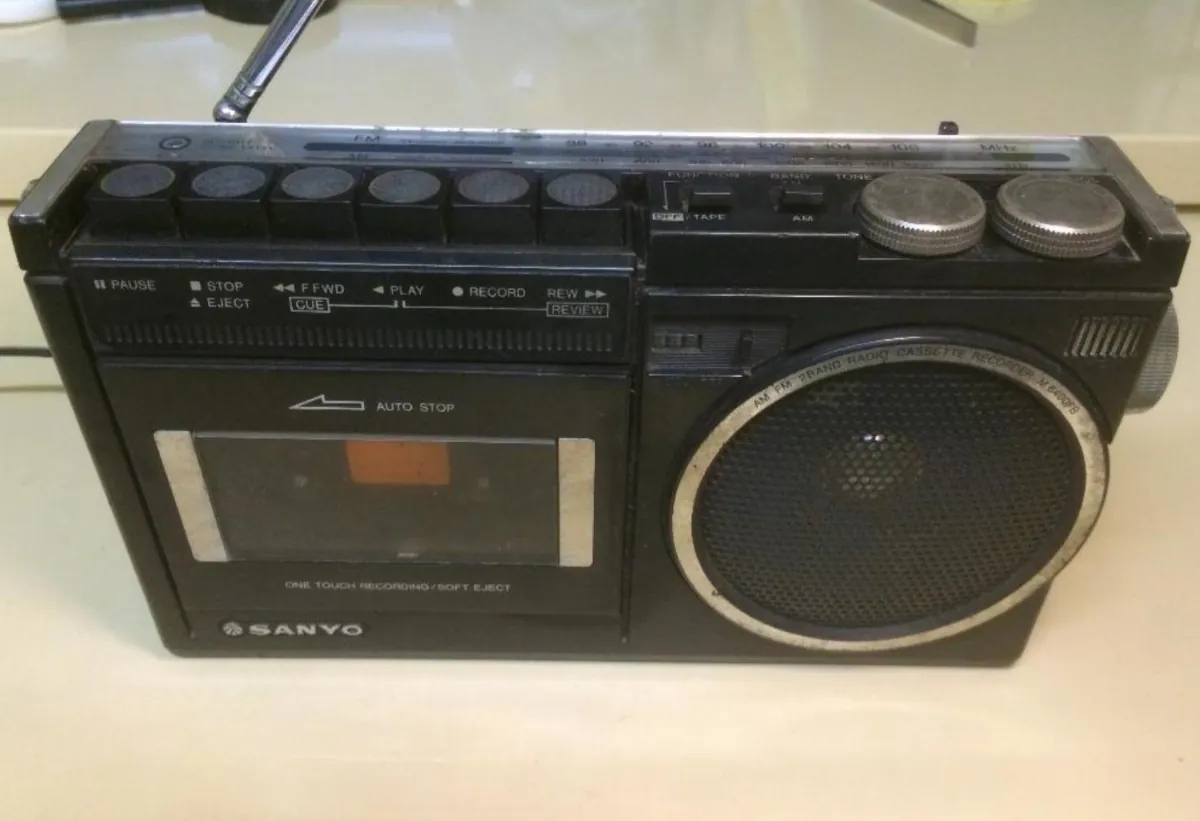
When I was a preteen, my parents finally bought my brother and me—after much insistence—a black Sanyo mono cassette player. It was gorgeous, sounded amazing to us, and on top of that, it was very small and ran on both AC power via an external transformer and batteries, so we could take it out onto the street and listen to the loud music we loved most with our neighborhood friends. One of the first tapes I bought was the double album “Made in Japan” by the band in question. I listened to that album so much that the tapes were completely worn out; all the lettering printed on the casing had faded away, so I could never tell if I was playing Side A, Side B, or which of the two tapes I was playing until the music started.
I think, like everyone else, I started out with rock and heavy metal or hard rock, much to the torment of my poor mother, who suffered from migraines and headaches day in and day out. What patience mothers have!
Around that time, a small record store opened in my town, and the owner seemed like a hipster to us. He dressed differently, moved differently—motorcycle, slicked-back hair, long-legged—what we’d call today a “hipster.” He had a silver tower stereo with a big volume knob that sounded amazing in that tiny space. And there we’d go to browse vinyls and chat with him, since he was known to another group of friends older than me. What made this shop unique was that, in addition to letting you listen to the record before buying it, he could record it onto a cassette for you and copy the cover art if you didn’t have enough money for the original. The whole process was analog and reasonably priced—unlike “others” who, sadly, are all too common in this vinyl-loving scene we’re talking about**.
One morning in 1984 or 1985, when I walked into this store, an album by my favorite band at the time was playing; they had returned to the recording studio eight years after breaking up in 1976. I immediately asked them to make a tape for me (at 15, I didn’t have any money to speak of), a tape I kept until my last move a few years ago and which I had held onto out of nostalgia, since I didn’t even have a player to listen to it on.
On July 9, 2022, early in the morning, Josep Busquets posted on Instagram (@amigoshifi ) early in the morning recommending "Son of Alerik ", an instrumental track from the album we're discussing today that wasn't included in the original LP edition (8 tracks) or the CD edition (9 tracks); it only appears on the 1999 CD reissue (10 tracks).
Who knows if, exactly 38 years ago today, I walked into that record store in my town and the same album was playing. Who knows if our connection was meant to be from the start and it was the passing of the years that brought us together because it couldn’t have been any other way.
I really love this romantic idea of coincidences and spiritual connections—so overused in books and movie scripts—but unfortunately, reality wasn’t like that. When I heard the wonderful, hypnotic opening of the album in that little shop, it was in the winter of 1984/1985, because I remember it was a sunny, cold morning—typical of Castilian winters.
Let this review serve as a dedication and expression of gratitude to the editor and driving force behind this publication.
But let’s get down to business.
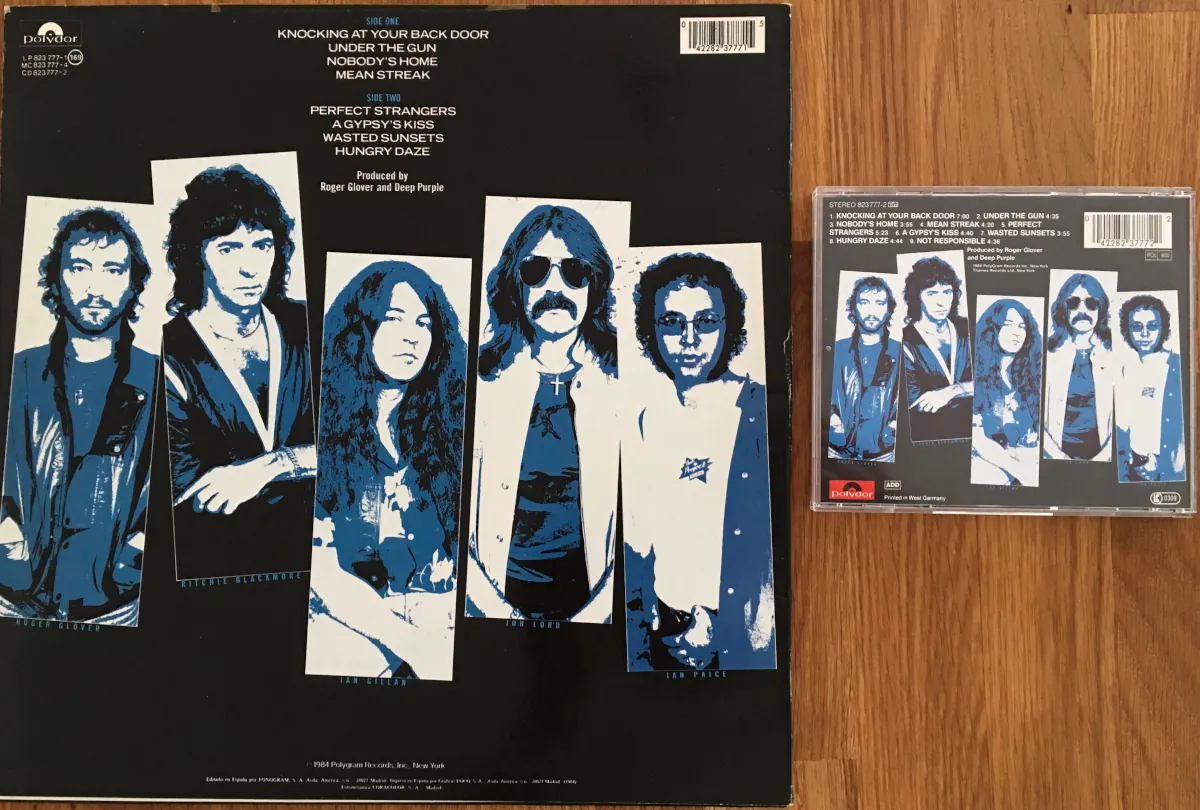
Deep Purple is an English band that formed in 1968 and, surprisingly, is still active today. Over the course of these many years, the band has had eight lineups, labeled Mark I through Mark VIII, with the Mark II lineup achieving the most success and sales. This lineup (Mk II) consists of the following musicians: Jon Lord on keyboards, Ian Paice on drums, Roger Glover on bass, Ritchie Blackmore on guitar, and Ian Gillan on vocals. Of all the members, only Ian Paice has been with the band since the beginning in every lineup. This Mark II lineup was active during the years 1969–1973, 1984–1989, and 1992–1993.
Deep Purple is considered one of the most important hard rock bands and has sold about 150 million albums, half as many as Julio Iglesias.
Deep Purple split up on July 19, 1976, and reunited in 1984, remaining active to this day.
But why did Purple split up? Well, I suppose that, as in all human relationships, it was due to a clash of egos. Either you operate with a shared ego, forming a whole and being an integral part of it, or one ego outweighs the other, and the balance shifts until the relationship breaks down. This clash of egos occurred between Gillan and Blackmore.
Timeline and development of the band’s reunion, recording, and tour.
April 1984. - MKII reunites in Kentucky to talk. It was the first time they had been together since June 1973 in Japan. On April 27, the London newspaper The Evening Standard published the news of the legendary band’s return to record and tour.
May 1984.- On May 1, the band began rehearsals in northern Vermont. The band had set up their equipment at a Von Trapp family estate, at a place called The Base Lodge.
June 1984.- Rehearsals had ended at the beginning of the month, and they had planned to record the album at the same rehearsal location using a mobile studio, but when they requested permission from Vermont authorities, the request was denied. (Apparently, Blackmore had planned to set up speakers around the valley and record the results.) So the band had another two weeks while another location was arranged.
July 1984.-
On July 6, the group moved to Horizons, a large ski lodge in Stowe, a small rural town of 4,000 inhabitants in Vermont. With all the tons of equipment set up and the French-Canadian mobile studio “Le Mobile,” recording sessions began on July 10 and would last approximately six weeks.
This region of the United States is known as New England, due to its striking resemblance to the English countryside, with vast open fields where the band relaxed, played soccer, and mingled with the locals in their bars and on the streets.
August 1984.-
The recording sessions ended on the 26th. Jon Lord said they had recorded more than necessary, but all the extra material has never been released. Standard video footage had also been recorded, which was later used for the music video of a track from the album.
Upon finishing the sessions, the band traveled to Hamburg, where two record labels had made offers that the group was considering.
September 1984.- On the 1st, the band gathered at the Tennesse Tonstudio in Hamburg, where they added new solos, vocals, etc., to the basic recordings they had from Stowe and mixed the album. The group decided there that Roger Glover would be the producer, and the album’s title—unknown until then—was also announced. They signed with Polydor Records for the release. Promotional photos were taken for the LP’s back cover, and to everyone’s surprise, the band performed the album at a nightclub in Hamburg (a photo of which appears on the LP’s front cover). On September 16, it went on sale in the U.S. market.
October/November 1984.- In October, rehearsals began at the Antico Hall in St. Peter’s Hall, Bedford (England), for the first tour. Over two weeks, they had to learn their classics from “Made in Japan” to fill out the live album’s setlist.
The album was released on November 2 in England, where it sold a million copies.
Perfect Strangers is the band’s eleventh album, their first since their 1976 split, and the fifth by the MK II lineup since 1973’s “Who Do We Think We Are.”
It was reissued again in 1999 on Mercury, and a film/documentary/music video of a concert by the group, titled “Perfect Strangers Live,” was released on October 15, 2013.
The original album has eight tracks, the CD version has one more track, and the 1999 Mercury CD edition has one more, for a total of ten, which is the version available on digital platforms.
The album has excellent sound quality—loud and clear, with all instruments well-positioned and full of depth—though, as Roger Glover rightly points out in an interview, they recorded with very little, if any, dynamic range; everything sounds at the same volume throughout. In this type of music, the high volume is appreciated, though personally I always much prefer a wide dynamic range; the true essence of the music lies there, in all those nuances that dynamic range brings.
The cover design was heavily criticized at the time, with people saying it was too simple and childish, reminiscent of the carvings we all used to make on tree bark as kids.
But against all odds, that cover became the band’s logo for years and appears on all their compilations.
The album opens with the impressive track “Knocking at Your Back Door ,” featuring a very intriguing organ intro that builds a sense of impending tension until Glover kicks in with his powerful bass and Paice hits the most challenging part of the beat, culminating in Blackmore’s riff flooding the entire track. A great track to introduce the band’s comeback and new beginning.
The album continues with “Under The Gun ,” the track that sounds the most diabolical. To me, the whole album sounds like something satanic, mysterious—if such a thing as satanic music even exists. Just my take.
And then comes one of my favorites, “ Nobody's Home”, which begins with one of Lord's organ flourishes until Paice lays down a powerful rhythm on the cowbell—I love that sound.
Side B opens with the title track, “Perfect Strangers ,” featuring an intro by Lord until the whole band kicks in. A truly mysterious and evocative track if ever there was one—another gem from the band.
As is essential on any self-respecting hard rock album, there’s the ballad “Wasted sunsets ,” featuring a great Blackmore in his signature style and sound, as if plucking every note on the Stratocaster.
In short, a fine collection of fantastic tracks that one never tires of listening to, even after all these years.
The extended version of the album concludes with the instrumental track “Son of Alerik ,” which served as the inspiration and starting point for this review.
For many, it was the best album of the band’s entire career; the truth is that it’s a very cohesive, well-balanced album, featuring great tracks where none of them feel out of place. Very well put together, with a solid sound, great riffs from Blackmore, and powerful drumming that perfectly sets the mid-tempo pace throughout the album. To say it’s the band’s best might be a bit of an exaggeration, but there’s no doubt it’s arguably the best comeback album by a band. They were at the top of their game.
As Busquets rightly said in his Instagram post, “Purple should have been studied in school.”
TRIVIA
Deep Purple were listed for years as the loudest band in the Guinness Book of World Records (this category no longer exists in the book) with 117 dB, recorded in 1972 during their performance at the London Rainbow Theatre.
Today, the record in that book is held by the band Manowar, who reached 129.5 dB in concert and 139 dB during a soundcheck in 1984. In 2009, the band Kiss reached 136 dB, the highest level recorded outdoors and not during a soundcheck.
These extremely high sound pressures have even been recorded as vibrations on seismographs, so imagine how much damage they cause to the ears of listeners and musicians.
**In the summer of 2022, Mike Esposito, owner of a record store in Phoenix, claimed in a YouTube video that the company Mobile Fidelity (Mofi) had used digital copies to manufacture its expensive analog vinyl editions. Following the scandal, which made its way to The Washington Post, the company issued a statement claiming that since 2011, 60% of its vinyl releases had used DSD (Direct Stream Digital) technology to manufacture its audiophile vinyls.
Deep Purple Discography (Studio Albums)
- Shades of Deep Purple (1968)
- The Book of Taliesyn (1968)
- Deep Purple (1969)
- Deep Purple in Rock (1970)
- Fireball (1971)
- Machine Head (1972)
- Who Do We Think We Are (1973)
- Burn (1974)
- Stormbringer (1974)
- Come Taste the Band (1975)
- Perfect Strangers (1984)
- The House of Blue Light (1987)
- Slaves and Masters (1990)
- The Battle Rages On... (1993)
- Purpendicular (1996)
- Abandon (1998)
- Bananas (2003)
- Rapture of the Deep (2005)
- Now What?! (2013)
- inFinite (2017)
- Whoosh! (2020)
Perfect Strangers on YouTube
On YouTube, there are videos that compile the entire Perfect Strangers album, with all its songs in order, as well as the official music video for the title track and documentary footage from the tour associated with the album.