History of Rendez-Vous
Jean-Michel Jarre
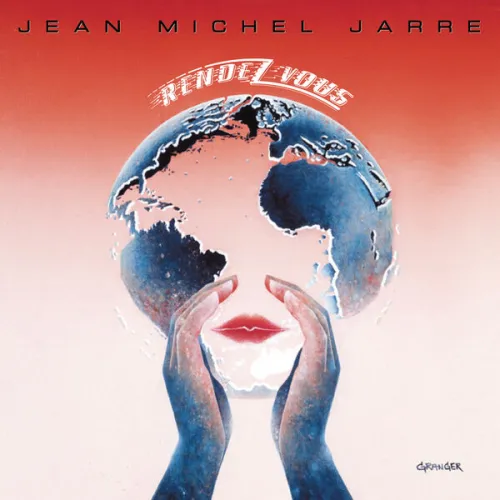
Rendez-Vous is the eighth studio album by French composer Jean-Michel Jarre, released in 1986 on the Disques Dreyfus label, with an international license to Polydor. It is an instrumental electronic music album conceived as a six-part suite that explores the theme of space travel and humanity"s aspirations to explore beyond Earth. The album reached number 9 on the UK charts and number 52 in the United States, becoming his longest-charting album in both countries.
The central concept of Rendez-Vous revolves around space and, in particular, the collaboration with NASA"s space shuttle program. The work is structured in six sections ("First" to "Last Rendez-Vous") that flow into one another, forming a continuous sonic journey that combines solemn passages, epic melodies, and cosmic textures created with analog and digital synthesizers. Jarre designed the album with the idea that parts of the music could be played during space missions, reinforcing its character as an imaginary soundtrack to the cosmos.
One of the album"s best-known and most moving aspects is the story linked to the space shuttle Challenger. The final track, "Last Rendez-Vous (Ron"s Piece)," was originally intended to include a saxophone solo performed by astronaut and musician Ronald McNair from space, which would have made the recording the first piece of music recorded in orbit. However, on January 28, 1986, 73 seconds after liftoff, the Challenger disintegrated and the crew, including McNair, perished; Jarre then dedicated the piece to their memory, with the saxophone part ultimately recorded in the studio by Pierre Gossez.
The album opens with "First Rendez-Vous," a relatively brief introduction of just under three minutes that sets the contemplative and space-themed tone of the work. Next, "Second Rendez-Vous," lasting over ten minutes, functions as an extensive centerpiece composed of several linked sections, alternating between melodic motifs and more atmospheric passages. "Third Rendez-Vous" and "Fourth Rendez-Vous" continue to develop the album"s musical language with more recognizable melodies and distinct rhythms, which became highly identifiable fragments of Jarre"s repertoire.
"Fifth Rendez-Vous" is characterized by its slower tempo and gradual build-up, providing one of the album"s most epic moments before leading into the final piece dedicated to McNair. "Last Rendez-Vous (Ron"s Piece)" closes the work with a saxophone over an electronic base that simulates a heartbeat, creating an atmosphere of solemn and meaningful commemoration in the wake of the Challenger tragedy. This conclusion reinforces the album"s emotional dimension, beyond its technological and spatial aspects.
In terms of recognition, Rendez-Vous won the award for "Instrumental Album of the Year" at the Victoires de la Musique in France and was nominated for a Grammy for Best New Age Album in 1987. Commercially, it is estimated to have sold around three million copies worldwide, cementing Jarre"s status as one of the central figures of popular electronic music in the 1980s. The album"s long run on the British and American charts demonstrated the composer"s ability to connect with audiences beyond the electronic niche.
The album"s release was also linked to major live events. Following its release, Jarre organized massive concerts such as Rendez-Vous Houston (1986) and, later, Rendez-Vous Lyon, where he performed material from the album before massive audiences with enormous displays of lights, projections, and fireworks, in keeping with the style of his massive urban shows. These performances reinforced the association of Rendez‑Vous with the idea of a technological and futuristic celebration.
Over time, the album has been reissued in various formats and has remained one of the cornerstones of Jean-Michel Jarre"s catalog. The space-themed narrative, the story of Ron McNair, and the combination of memorable melodies with electronic textures have ensured it remains a benchmark for fans of symphonic electronic music. In addition, tracks such as "Fourth Rendez-Vous" have been revisited in later versions, such as the maxi-single and remixes associated with Rendez-vous '98, released to coincide with the 1998 World Cup in France.
History of Jean-Michel Jarre
Jean-Michel André Jarre was born on August 24, 1948, in Lyon (France) and is a composer, performer, and producer, considered a pioneer of electronic, ambient, and new age music. The son of the renowned film composer Maurice Jarre, he grew up in an artistic environment, though he forged his own path, combining academic studies with experimentation in electroacoustic music studios. He is best known for his massive outdoor concerts, accompanied by spectacular laser shows, projections, and pyrotechnics that have broken attendance records.
In his youth, Jarre studied harmony, counterpoint, and fugue with Jeannine Rueff at the Paris Conservatoire, while balancing his musical interests with other artistic pursuits such as painting. In the late 1960s, he joined the Groupe de Recherches Musicales (GRM), where, under the influence of Pierre Schaeffer, he learned techniques of concrete and electroacoustic music. During this period, he began experimenting with tape, studio effects, and the combination of traditional instruments (guitar, flute) with electronic sounds.
His first studio album, Deserted Palace, was released in 1972, but global recognition came with Oxygène, originally released in France in 1976 and shortly thereafter internationally. This work, composed of six continuous movements, became a classic of electronic music, notable for its use of analog synthesizers and its accessible melodic approach. Oxygène was followed by albums such as Équinoxe (1978) and Les Chants Magnétiques / Magnetic Fields (1981), which solidified his style and reputation as an innovator.
In the 1980s, Jarre expanded his international reach both in the studio and on stage. In addition to Rendez‑Vous (1986), he released works such as Concerts in China (documenting his historic concerts in China in 1981) and Zoolook (1984), the latter known for its use of vocal samples in various languages. His outdoor shows, such as those held in Paris, Houston, and Lyon, combined his music with massive visual productions and earned him record attendance figures and extensive media coverage.
Jarre"s discography has remained active for decades, incorporating new technologies and collaborations. In the 1990s, he released albums such as Waiting for Cousteau (1990), dedicated to oceanographer Jacques-Yves Cousteau, Chronologie (1993), and Oxygène 7–13 (1997), a conceptual continuation of his seminal work. In the 2000s and 2010s, he continued with projects such as Métamorphoses (2000), Sessions 2000 (2002), Geometry of Love (2003), Téo & Téa (2007), and the series Electronica 1: The Time Machine (2015) and Electronica 2: The Heart of Noise (2016).
In the second half of the 2010s and 2020s, Jarre has continued to innovate with works such as Oxygène 3 (2016), Equinoxe Infinity (2018), EōN (2019)—a generative work linked to an app—, Amazônia (2021), and Oxymore (2022). These albums explore both the legacy of his classic works and new sonic territories, including immersive formats and collaborations with cultural institutions. His career has established him as a central figure in global electronic music, influencing multiple generations of producers and composers.
Throughout his career, Jean-Michel Jarre has sold tens of millions of albums and received numerous awards and accolades. His mega-concerts have set attendance records (such as the one in Paris in 1979 or the one in Houston in 1986) and have helped popularize electronic music in mass settings. His work, ranging from the melodic electronic music of the 1970s to contemporary conceptual projects, remains an essential reference within the genre.
Jean-Michel Jarre Discography (Major Studio Albums)
- Deserted Palace (1972)
- Oxygène (1976)
- Équinoxe (1978)
- Les Chants Magnétiques / Magnetic Fields (1981)
- Les Concerts en Chine (1982, live, a key work in his catalog)
- Music for Supermarkets (1983, one-off edition sold at auction)
- Zoolook (1984)
- Rendez-Vous (1986)
- Revolutions (1988)
- Waiting for Cousteau (1990)
- Chronologie (1993)
- Oxygène 7–13 (1997)
- Métamorphoses (2000)
- Sessions 2000 (2002)
- Geometry of Love (2003)
- Téo & Téa (2007)
- Oxygène: New Master Recording (2007)
- Electronica 1: The Time Machine (2015)
- Electronica 2: The Heart of Noise (2016)
- Oxygène 3 (2016)
- Equinoxe Infinity (2018)
- EōN (2019)
- Amazônia (2021)
- Oxymore (2022)
Rendez-Vous on YouTube
On YouTube, there are several videos and playlists featuring the complete Rendez-Vous album, including remastered versions with all six parts in order.